inquiry@tibettourism.com
 86-15728991588


.jpg)


Jiwu Monastery (also spelled Jiu Monastery, Jiwu Si, Chiu Monastery, Chiu Gompa, or Sparrow Monastery) is one of the most spiritually significant yet little-known monasteries in western Tibet. Located on the western shore of Lake Mansarovar, this small but sacred site is deeply connected with Guru Rinpoche Padmasambhava, Tibetan Buddhist legends, and the ancient pilgrimage sites surrounding Mount Kailash.
Despite its small size, Jiwu Monastery holds a vital place in the religious landscape of the Ngari Prefecture. For pilgrims, it is a sacred site for meditation and prayer; for travelers, it offers an excellent vantage point for viewing the holy Lake Mansarovar.
Where Is Jiwu Monastery Located?
Jiwu Temple is located in Purang County, Ngari Prefecture, in the westernmost part of Tibet. It sits on the western shore of Lake Mansarovar, one of the most sacred lakes in the Himalayas, at an altitude of approximately 4,650 meters.
The monastery sits atop a hill overlooking the vast turquoise lake, offering panoramic views of the surrounding plateau and distant snow-capped peaks. Nearby lie two of Tibet’s most revered mountains: Mount Kailash, considered the center of the world in many religions, and Mount Gurla Mandhata (Namo Nanyi Peak), the highest peak in the region.

The Meaning Behind the Name “Jiwu Monastery”
The name “Jiwu” originates from Tibetan and means “little bird.” According to local legend, the name is closely related to the founding legend of the monastery and its connection with Guru Rinpoche (Padmasambhava).
The hill where the monastery is located is also known locally as “Sando Barui,” meaning “auspicious copper-colored mountain.” In the spiritual geography of Tibetan Buddhism, mountains are often regarded as living entities and sacred mandalas, and this symbolic name reflects the religious significance of this hill. Together, the name of the monastery and the hill emphasize themes of guidance, auspiciousness, and spiritual transformation.
Padmasambhava and the Sacred Legends of Jiwu Monastery
Jiwu Monastery is most famous for its close connection with Guru Rinpoche (also known as Padmasambhava, meaning “precious guru”). Guru Rinpoche is one of the founders of Tibetan Buddhism and is considered to have introduced Vajrayana teachings to Tibet in the 8th century. In the Nyingma school, Guru Rinpoche is revered as the second Buddha.
One of the enduring legends surrounding Jiwu Monastery holds that, after completing his Kailash Mansarovar Parikrama, Guru Rinpoche continued his meditation in this region. A sacred bird guided him to a hill overlooking Lake Mansarovar, where the natural forces drew him to seclusion for focused meditation. It is said that Guru Rinpoche dissolved local deities or evil spirits that hindered his practice, transforming them into protectors of the Buddhist Dharma.
Another version of the story states that Guru Rinpoche meditated at Jiwu for seven days, performing esoteric rituals and profound yoga practices. It is said that during this time, he left footprints on the rocks, which are now considered sacred objects, symbolizing the encounter between an enlightened mind and a pure environment. These traces are seen not only as historical relics but also as powerful symbols of blessings and spiritual presence.
A meditation cave associated with Guru Rinpoche can be found on the hillside. Such caves are an important feature of Tibetan Buddhist practice, symbolizing renunciation, spiritual discipline, and direct communion with enlightened wisdom. In the sacred sites of Tibetan Buddhism, natural landscapes such as caves, lakes, and mountains are not passive backdrops but active participants on the spiritual path. It is believed that practicing in such places deepens the connection between the practitioner and their inner self, as well as the enlightened power represented by Gurus such as Padmasambhava.
Jiwu Monastery in Tibetan Buddhism
Jiwu Monastery is traditionally closely associated with the Nyingma school—the oldest school of Tibetan Buddhism. The Nyingma school emphasizes esoteric practices, meditation in the natural environment, and the spiritual lineage of Guru Rinpoche (Padmasambhava).
Jiwu Monastery is not a large monastery complex, but rather reflects an older form of religious life within Tibetan Buddhism: monasteries, caves, lakes, and mountains combine to form a complete sacred landscape. The natural environment is not separate from religious practice, but rather considered an integral part of it.
Therefore, Jiwu Monastery holds special significance for pilgrims seeking tranquil meditation and for travelers interested in the philosophical roots of Tibetan Buddhism.
Jiwu Monastery and Lake Mansarovar
Lake Mansarovar, at an altitude of 4,590 meters, is not only a geographical wonder but also a spiritual sanctuary for millions of believers. As one of the highest freshwater lakes in the world, it is revered as a sacred lake by the four major religions of Buddhism, Hinduism, Jainism, and Bon. The lake has traditionally been believed to purify one’s mind and body; bathing in it is said to wash away negative karma and inner afflictions, and thereby bestow spiritual merit.
Eight Temples Around Lake Mansarovar
Historically, Lake Mansarovar was guarded by eight monasteries positioned in the cardinal and ordinal directions, forming a spiritual mandala around its shores. While the passage of time has left some in ruins, five monasteries remain active today, serving as vital sanctuaries for pilgrims on the Mansarovar Parikrama route:
1. Jiwu Monastery (Chiu Gompa): Sitting on a steep hill on the northwest shore, this is the most famous temple of the five. It was built around a cave where Guru Rinpoche meditated for his last seven days on earth. Its red and white walls look beautiful against the blue lake, making it a perfect spot for photos.
2. Trugo Monastery: Located on the southern shore, this is the largest monastery at the lake. It is a very important stop for pilgrims because it offers the best view of Mount Kailash reflecting in the water.

3. Gossul Monastery: Built on the southwest cliffs, this quiet temple is a peaceful place to meditate. It offers a wide, stunning view over Lake Mansarovar.

4. Serelong Monastery: Found on the eastern shore, this is usually the first stop for people starting their walk around the lake. It represents the sunrise and a fresh spiritual start.
5. Yerngo (Langbona) Monastery: Located to the north, its name means “Elephant’s Trunk” because of the shape of the land. It is the final link in the circle of temples around the lake.
Pilgrimage to Lake Mansarovar and Mount Kailash
Spanning approximately 320 square kilometers, Lake Mansarovar lies in the shadow of the majestic Mount Kailash, forming a sacred duo. For centuries, pilgrims have traveled thousands of miles to perform the Kora around Mount Kailash and Lake Mansarovar’s shores. Bathing in Lake Mansarovar is believed to cleanse the soul of sins and lead to spiritual liberation. Pilgrims usually follow the tradition of “first the mountain, then the lake,” believing that after the rigorous Kailash Parikrama, the serene waters of Mansarovar offer a place for reflection and ultimate purification. Here, travelers can soak in natural hot springs located nearby, resting their weary limbs while watching the sunset.
Jiwu Monastery Viewpoint: Overlooking Lake Mansarovar and Mount Kailash
Jiwu Monastery is built on a small, rocky hill. This special location makes it one of the best viewpoints in all of Tibet. When you stand on the monastery’s balcony or walk along its stone walls, you can see a 360-degree view of the beautiful landscape. It is the perfect place to see two of the most famous sacred sites in the world at the same time.
A Bird’s-Eye View of Mansarovar Lake
Looking down from the monastery, you get a clear view of Lake Mansarovar. The water is famous for its deep, bright blue color. Because the monastery is high up, you can see just how large the lake is. On a calm day, the surface looks like a giant blue mirror. You can watch the small waves hit the shore and see the shadows of the clouds moving across the water. It is a very peaceful sight that helps travelers feel relaxed and quiet.

A Clear View of Mount Kailash
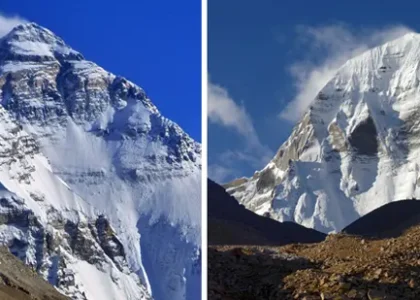
If you look toward the north, you will see the snowy top of Mount Kailash. This mountain is shaped like a pyramid and is sacred to many people. Even though it is many kilometers away, the view from Jiwu Monastery is clear. Many pilgrims come here to sit and look at the mountain while they pray. Seeing the white snow of the mountain against the blue sky is a memory you will never forget.

The Best Spot for Shooting Sunrise and Sunset
For those who love photography, Jiwu Monastery can be the best spot to shoot sunrise and sunset. During these hours, the soft sunlight turns the monastery’s red walls into a glowing orange color. The lake water often changes from blue to gold as the sun moves. It is a quiet, magical time. Whether you are a professional photographer or just using your phone, you will be able to take amazing pictures of the “Sacred Lake and Holy Mountain” from this one spot.
Conclusion
Jiwu Monastery is more than just an ancient building on a hill. It is a place where history, religion, and natural beauty come together. Whether you are interested in the legends of Padmasambhava, the spiritual history of Tibetan Buddhism, or simply want to find the best spot to photograph Lake Mansarovar and Mount Kailash, this monastery offers an experience you cannot find anywhere else.
Walking through its red walls and looking out over the blue waters of the sacred lake provides a sense of peace that stays with you long after you leave. For any traveler planning a Kailash tour, a stop at Jiwu Monastery is essential. It is the perfect place to rest your body in the local hot springs and refresh your spirit with stunning views of the holy land.