inquiry@tibettourism.com
 86-15728991588


.jpg)


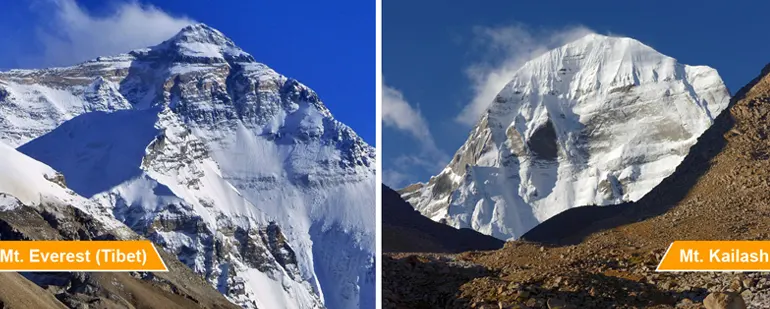
When planning a trip to Tibet, many travelers find themselves weighing the choice between Mount Kailash and Mount Everest. While both are iconic landmarks of the Tibetan Plateau, they offer vastly different experiences. Mount Everest is renowned as the world’s highest peak, drawing countless visitors with its magnificent Himalayan scenery and the chance to witness the “roof of the world” up close. In contrast, although Mount Kailash is lower in elevation, it stands as one of Asia’s most sacred mountains, attracting pilgrims and travelers alike who seek profound cultural and spiritual experiences.
So, should you choose Mount Kailash or Mount Everest? This guide compares the two peaks across various dimensions, including elevation, location, natural scenery, travel experience, and trekking difficulty, to help you select the destination that best suits your Tibetan adventure.
Kailash vs Everest at a Glance
Mount Kailash stands at an elevation of approximately 6,638 meters (21,778 feet) and is one of the most sacred peaks in Asia. Located in western Tibet, it is a major pilgrimage site for followers of Tibetan Buddhism, Hinduism, Jainism, and Bon. Visitors typically come to undertake the famous “Kailash Kora”, a highly challenging high-altitude trek that circles this holy mountain.
Mount Everest rises to 8,848.86 meters (29,031.7 feet), making it the highest peak on Earth. Situated on the border between Tibet and Nepal, it is renowned worldwide for its magnificent Himalayan scenery. Most visitors arriving from the Tibetan side travel to Everest Base Camp to admire the majestic views of the mountain’s North Face, rather than attempting to summit the peak.
In short, Mount Kailash is distinguished by its profound religious and cultural significance, while Mount Everest stands as one of the world’s most spectacular natural landmarks and mountaineering destinations. If you’re looking for a spiritual pilgrimage, to immerse yourself in Tibetan culture, or to experience a trek, choose Mount Kailash; if you want to admire iconic mountain scenery and witness the grandeur of the world’s highest peak, choose Mount Everest.
Kailash Kora vs Everest Base Camp Trek
When comparing Kailash vs Everest, the travel experience is also very different. At Mount Kailash, travelers can complete the Kailash Kora, a sacred pilgrimage route around the mountain. At Mount Everest in Tibet, most visitors travel to Everest Base Camp to see the mountain’s spectacular north face.
Although both experiences take place in Tibet’s high-altitude landscapes, the Kailash Kora is a multi-day pilgrimage and trekking journey. At the same time, a visit to Everest Base Camp is mainly focused on sightseeing and experiencing the world’s highest mountain up close.
Kailash Kora
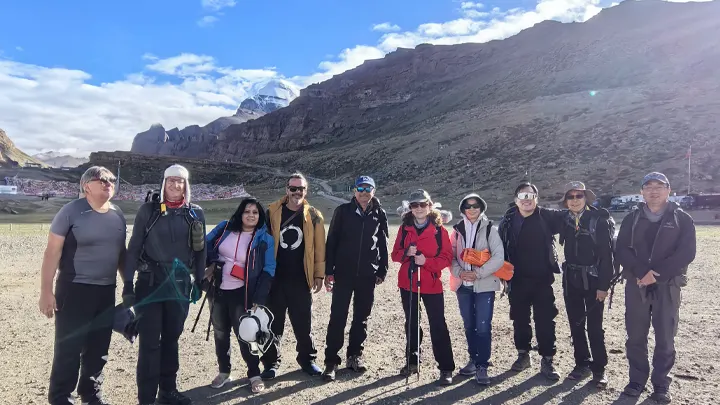
The Kailash Kora is not a climb to the summit of Mount Kailash, but rather a traditional pilgrimage route that circles the sacred mountain. For centuries, pilgrims have undertaken this journey on foot as an act of devotion.
The trek usually begins in Darchen, a small town at the foot of Mount Kailash. From there, travelers follow the pilgrimage path to Dirapuk Monastery, which offers the most spectacular views of the mountain’s north face. The route then crosses the Dolma La Pass, the highest and most physically demanding section of the circuit, and finally returns to Darchen.
Completing the full Kailash Kora generally takes 3-4 days and requires a good level of physical fitness. The high-altitude environment and the crossing of the Dolma La Pass make the journey extremely challenging, even for experienced hikers. Therefore, adequate acclimatization and preparation before starting the trek is essential.
Everest Base Camp Trek in Tibet
An Everest Base Camp trek in Tibet is a 4-day journey through the Himalayan region, offering a different way to experience the world’s highest mountain.One of the classic trekking routes starts from Old Tingri and follows mountain trails through remote valleys, Tibetan villages, and high-altitude passes toward the Everest region.
Along the way, the landscape gradually changes from open highland terrain to rugged mountain valleys and snow-covered peaks. The trek also offers views of Mount Everest and other Himalayan mountains before reaching the Rongbuk area and Everest Base Camp. Rongbuk Monastery is another highlight, which is a serene and historic site with deep cultural significance.
Compared with the Kailash Kora, an Everest Base Camp trek is focused more on the changing Himalayan landscape and the journey toward the world’s highest mountain. The Kailash Kora follows a fixed pilgrimage circuit around a sacred mountain, while the Everest trek takes you through valleys, villages, mountain passes, and remote terrain before arriving at Everest Base Camp. Both require good physical preparation and acclimatization, but they offer very different reasons to walk.
Kailash vs Everest: Which Has Better Scenery?
Mount Kailash boasts a vast and remote landscape shaped by the Tibetan Plateau, while Mount Everest is renowned for its striking Himalayan peaks and unforgettable status as the world’s highest mountain.
Mount Kailash: Sacred Landscapes and the Tibetan Plateau
The scenery surrounding Mount Kailash is unique due to its remote location in western Tibet. Travelers can admire vast plains, rugged peaks, snow-capped mountains, and Mount Kailash’s distinctive pyramid-shaped form, towering proudly above the surrounding landscape. During the pilgrimage, you can walk alongside pilgrims and travelers from all over, traversing this challenging route together and helping each other along the way. Sharing the breathtaking views along this centuries-old pilgrimage route will undoubtedly be one of the most unforgettable experiences of your Mount Kailash journey.
Two of the most striking natural attractions in the region are Lake Mansarovar and Lake Rakshastal. Lake Mansarovar is renowned for its clear blue waters and sacred significance, with Mount Kailash visible in the surrounding scenery. Nearby, Lake Rakshastal offers another striking view, with its deep blue waters, rugged mountains, and dramatic high-altitude setting creating a powerful contrast with the calmer beauty of Lake Mansarovar.
For many travelers, the scenery around Mount Kailash is more than just natural beauty. The combination of the sacred mountain, pilgrimage routes, remote landscapes, and high-altitude lakes gives the region a unique atmosphere that cannot be found at a common destination.
Mount Everest: Himalayan Peaks and the North Face
The scenery around Mount Everest is dramatic and mountainous. As travelers approach the Everest region, the landscape opens up to views of the Himalayas, with towering snow-covered peaks, glaciers, and deep valleys creating an impressive high-mountain environment.
The Rongbuk Valley is one of the highlights of the journey, offering spectacular views of the surrounding Himalayan landscape. Walking along the valley, snow-capped mountains rise on either side, with rugged rocky slopes and glaciers in the distance.
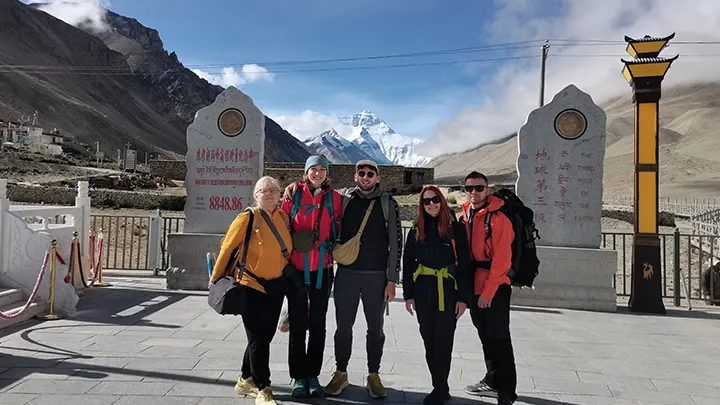
From the Everest Base Camp area, visitors can see the magnificent north face of Mount Everest, rising above the surrounding mountains. On clear days, the changing light reveals different facets of Everest throughout the day, and the open terrain around Base Camp allows for unobstructed views of Mount Everest and the surrounding Himalayan mountain range.
Can You Visit Kailash and Everest on the Same Tibet Trip?
Yes, you can visit Mount Kailash and Mount Everest on the same Tibet trip, and combining the two is a popular choice for travelers who want to experience both of Tibet’s most iconic mountains. Since Everest Base Camp lies on the route toward western Tibet, it can be included in a longer Kailash itinerary rather than requiring a completely separate trip.
An Everest Base Camp trip can take around 8 days, while a classic Mount Kailash journey from Lhasa takes about 15 days. So our itineraries combine Everest Base Camp and the Kailash pilgrimage in a single 15 to 16 days journey.
A typical combined route starts in Lhasa, travels through Shigatse to Everest Base Camp, and then continues west through Saga to Darchen and Mount Kailash. After visiting Lake Mansarovar and completing the three-day Kailash Kora, travelers return to Lhasa or continue toward Nepal, depending on the itinerary.
The longer itinerary allows time for altitude acclimatization, long drives across the Tibetan Plateau, sightseeing, and the three-day Kailash Kora. If you have around two weeks, combining Everest and Kailash allows you to experience two very different sides of Tibet: the dramatic north face of Everest and the sacred landscapes surrounding Mount Kailash.
Can Foreign Travelers Visit Kailash and Everest in Tibet?
Yes. Foreign travelers can visit both Mount Kailash and Mount Everest in Tibet. However, Tibet has special travel requirements for international visitors, so a trip to these destinations needs to be planned in advance. A registered Tibet travel agency like us can organize the necessary documents, transportation, accommodation, and guided services for you.
Tibet Travel Permit
The Tibet Travel Permit is the basic permit for foreign travelers visiting Tibet. It is required before entering the Tibet Autonomous Region and is arranged through a registered travel agency. When you book a Tibet tour, you can provide your passport and the required visa information to the agency. The agency then handles the permit application based on your itinerary. This permit is required whether you are planning to visit Everest Base Camp or travel further west toward Mount Kailash.
Aliens’ Travel Permit
The Aliens’ Travel Permit is required when foreign travelers enter certain restricted areas outside Lhasa. Mount Kailash and Lake Mansarovar are among the destinations where this permit may be required. This permit is different from the Tibet Travel Permit. While the Tibet Travel Permit covers entry into Tibet, the Aliens’ Travel Permit allows foreign visitors to travel to specific restricted areas within Tibet.
Military Permit
A Military Permit is required for travel to certain sensitive areas in Tibet, particularly destinations close to international borders. For foreign travelers visiting Mount Kailash and Lake Mansarovar, this permit may be required because the region is located in a restricted border area.
The permit provides authorization to travel through these designated areas. Unlike the general Tibet Travel Permit, it applies specifically to certain sensitive regions and is an additional requirement for some Kailash itineraries.
Conclusion
Mount Kailash and Mount Everest are not truly a choice between two competing peaks. They offer two distinct ways to experience Tibet. Mount Kailash is ideal for those interested in pilgrimage, Tibetan culture, high-altitude trekking, and sacred landscapes, while Mount Everest is a great option for those wanting to see the world’s highest peak and experience the breathtaking scenery of the Himalayas.
Planning a trip to these remote areas can involve permits, high-altitude travel, transportation, and carefully arranged accommodations. Our experienced Tibet tour team can help you plan a practical itinerary based on your travel interests and schedule, allowing you to spend less time worrying about logistics and more time experiencing Tibet.